
How to Hug a Man | 143 🖤
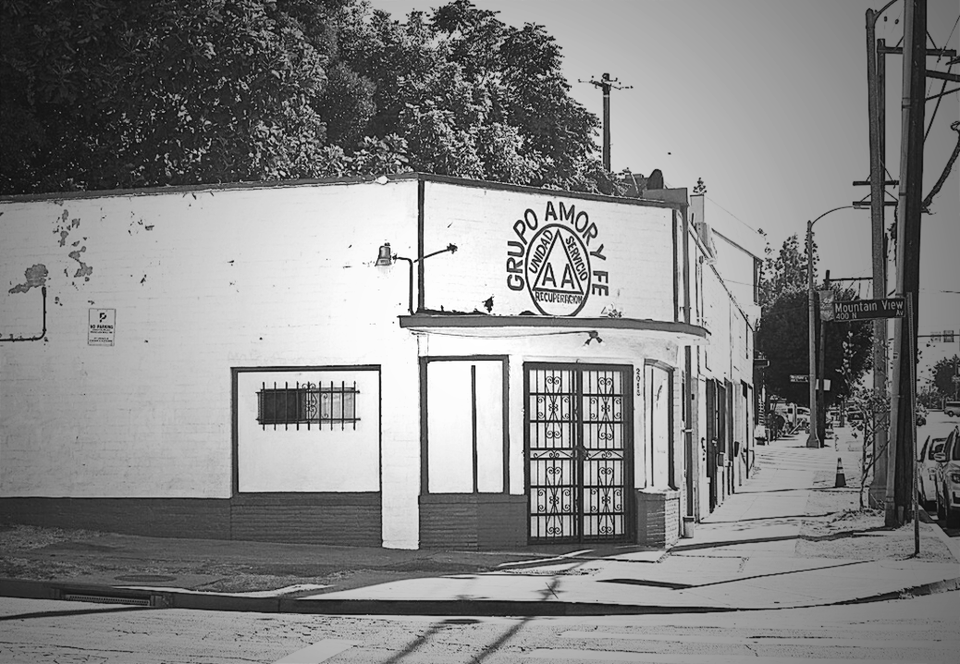

Each chapter of God Don't Make No Trash is built from small stories that are 300 words or less. See How to Hug a Man below as a complete chapter. Also check out GDMNT's introduction or visit the stories page.
Forever War 🍺🍷
"I owe everything I have in my life to Alcoholics Anonymous and sobriety."
—Rob Lowe
> how to hug a man | science
At Alcoholics Anonymous, I wanted to know the power of a hug from a round man named Cody or Bryson or something else common like that in Oklahoma.
I wanted to know more about the science of my own mind, too.
Like I did as a journalist, I sought out answers from published papers and books and documentaries and podcasts.
I achieved my first 30 days without alcohol in 2021 after a lifetime of drinking that any health expert would have called alcoholism.
After my first 90 days, staying sober became my forever war.
I learned that scientists over years of research had brought addiction and our unconscious, intuitive minds into tighter focus.
A textbook totaling over 500 pages was published in 2006 that compiles just some of the research. Wrote two authors:
"One of the major messages of this book is that the psychological mechanisms that are central to addiction are often automatic and occur outside the individual's introspection."
Scientists have extensively investigated the relationship between addiction, alcoholism, and so-called "implicit cognition," another name for what 19th century psychologist Sigmund Freud called the unconscious mind.
A 2010 study found that the relationship was clear: "implicit processes consistently have been found to predict or correlate with addictive behaviors."
In a 2017 study, three experts agreed:
>> "The interaction between explicit (controlled) and implicit (automatic) cognitions would allow the understanding of irrational actions like addictive behaviors. This model has gained great popularity among addiction researchers."
- next time "A darkened ditch stopped him from reaching the target."
- listening Dead Meadow "Dusty Nothing"
Aiming a BMW ⚖️
"I drink to forget I drink."
—Actor Joe E. Lewis
> how to hug a man | ditched BMW
One research study from 2010 points to the crushing paradox of alcoholism.
The abuse continues despite endless pain and suffering caused by days-long binges or heavy daily drinking.
Scientists today know enough about the intuitive mind – also known as the implicit or unconscious mind – that we may be able to predict binge drinking in youths from a year away.
In other select cases, specialists can work to directly interfere with the unconscious processes that help power addiction, says a 2018 study.
For alcoholics, self-control is brutal.
Conscious intentions alone often aren't enough to overcome the unconscious wanting.
Multiple DUIs are common. Multiple relapses and stays at treatment centers are common.
While attending mandated DUI courses, I became pals with a man who was once an executive at a prominent Oklahoma bank.
He wound up in the local newspaper after aiming his BMW at a school in the middle of the night. A ditch stopped him from reaching the target. He went to jail.
We'd both been trying to quit for years.
At Alcoholics Anonymous, one hears endless similar stories about relapses and the shame and embarrassment that follow.
Said one man at an AA meeting:
"I repair and then I damage again."
- next time "Cues and associations can elicit a natural-feeling hunger."
- listening Johnny Cash "Sunday Morning Coming Down"
Damaged 🚧
"My favorite drink is the next one."
—Meme
> how to hug a man | trust
Maintaining sovereignty in sobriety means realizing that life still sucks in sobriety.
Many drunks and addicts are devastated to realize they still can't meet the expectations of loved ones who fixate on unscientific interpretations of "a better person."
"I repair and then I damage again," a man at an AA meeting said one night.
Family and friends can innocently and unintentionally become a threat that leads to relapse.
The alcoholic doesn't just have to worry about fighting the urge to drink. They have to worry about the inevitable lack of understanding from loved ones and people in their communities, too.
We can't expect everyday people to become educated on the science of addiction. We have to live within their narrow perceptions and understandings.
Scientists since the early 20th century have been studying the relationship between alcohol and families and seeking new treatment models.
Today researchers point to at least three cognitive biases that can fuel addiction and relapse:
- Cues and associations may elicit a natural-feeling hunger for alcohol.
- Our minds may automatically give more attention to alcohol cues.
- We may automatically gravitate toward alcohol from neutral cues.
Researchers wrote in 2011 that if people can’t or won't at least attempt to counter these biases, "the addictive behavior is likely to continue."
Like with every other facet of our lives, our minds can rapidly become our own worst enemies.
- next time "They lost a fistfight with a casino elevator."
- listening Orchid "Sign of the Witch"
Confessions 🅰️🅰️
"I don't trust anyone who hasn't been to jail at least once in their life."
—Filmmaker John Waters
> how to hug a man | coffee and cigarettes
After I got out of jail from my second DUI, a friend in California helped start me on a new path.
He'd been sober for years and gone on to help other addicts after earning a Master’s degree.
You should do 90 sobriety meetings in 90 days, he said.
I balked.
By the end, however, I'd attended over 120 meetings through Alcoholic Anonymous during that three months.
I felt safe from myself at meetings and preferred the ones held in churches.
In my hometown of Tulsa, finding meetings in churches is no problem. There's seemingly a church for every liquor store.
We probably have more churches than abandoned fast-food restaurants converted into strip clubs and cannabis dispensaries.
With each AA meeting, my confidence grew.
But for months, I was still so ashamed and depressed that I listened to no music at all. My love of music has been a close second to my love of books since I was a teenager.
During those first 90 days of gloomy, quiet reflection, I drank irresponsible quantities of AA’s infamously bad coffee.
I needed the caffeine to confess.
I knew others in the room had done the things I’d done.
So I confessed to drinking whiskey and vodka and beer in the morning, drinking at work, drinking before conference talks, and drinking before, during, and after pretty much any and all social engagements for years.
And every date. Ever.
I had to confess to my love of drinking in the closet so late at night that even the trees outside were asleep.
Reaching 90 days without a drink felt like a new reality. I had desperately wanted just one month but could never make it before ending up back in the parking lot of the liquor store.
Now my challenge was to make it to 91 days.
- next time "AA is the best podcast most people will never hear."
- listening Have Heart "Pave Paradise"
Three houses 🍸🕯️
> how to hug a man | low glow
It’s probably not accurate in the addiction world to refer to Alcoholics Anonymous as "group therapy." Experts might prefer "support group" or "self-help group."
But that seems to leave out so much.
For so many like me, Alcoholics Anonymous is an act of desperation when your alcoholism has burned the earth around you to ashes.
You don't need an insurance card, and AA is free worldwide. It’s also the best podcast most people will never hear.
It wouldn't be out of place for someone to share at a meeting that they lost three houses and a fistfight with the interior of a casino elevator before making it to their first meeting.
Seven DUIs wouldn't be a shock, either.
You see every profession and every income level.
Even today, I experience a low, warm glow at and after meetings. Alcoholics Anonymous reminds me that I’m not alone in my shame and pain.
At AA, you won't be kicked out for being drunk.
If you're drunk at an AA meeting, that's the evidence you need AA.
And the people of AA will always be waiting.
- next time "They can clumsily attempt interventions."
- listening Queens of the Stone Age "If Only"
Bound 𐦂𖨆𐀪𖠋
"If you like everybody in AA, you're not going to enough meetings."
—Alcoholics Anonymous
> how to hug a man | in search of sovereignty
Perception and psychology help us understand why a 2021 research paper found that alcohol and family are "inextricably bound."
I'm fortunate. My family has my back. But I've heard the painful stories at Alcoholics Anonymous.
Loved ones can "exacerbate problematic drinking," says the 2021 paper, just as family can clumsily attempt interventions like the ones seen on TV.
"Scientific research to understand the interrelationships between drinking and family functioning began in the early 1900s,”"wrote the 2021 paper’s authors.
"Treatment models that address both drinking and family functioning have been developed and tested for close to 75 years."
The American Psychological Association sees the connection, too. People closest to us help shape our addictions. Says the association:
>> "Family relationships influence drinking behavior, and these relationships often change during an individual's recovery. … A person may experience one or more relapses and return to problem drinking."
- next time "They sell fancy coffee to Christians."
- listening FKA twigs "Two Weeks"
Coffee buzz ⋆˚🐝˖°
"I don't have a drinking problem until I can't find a drink."
—Tom Waits
> how to hug a man | black coffee
I'm on a tour of duty at the local coffee shops in my hometown of Tulsa.
The ones where I've worked don't just sell coffee. They sell fancy coffee to Christians who don’t drink alcohol because Jesus.
I don't drink alcohol because DUIs.
At my small apartment, I don't drink good coffee, either. I drink instant coffee from Walmart.
The company makes bold claims that its instant coffee "delivers an inviting flavor and aroma that will take you directly to the mountains of Colombia."
That’s not my experience. Most Okies will never find themselves in Colombia.
Walmart-branded instant coffee, nonetheless, reminds me before I walk out the door that I'm no better than the drunk sitting next to me at Alcoholics Anonymous.
Instant coffee keeps me connected to reality and connected to how unlivable my life became as an alcoholic.
No meeting room of Alcoholics Anonymous, broadly speaking, should look or feel superior to the next. The rooms of AA are often in churches and famously spare.
No coffee served should taste superior from one room to another.
So it would be weird and out of place at an Alcoholics Anonymous meeting to bring exceptionally good coffee from work.
The mission is to keep the rooms open to those who have nothing else left and might even be drunk when they sit in the chair.
- next time "If it feels good, isn’t that scientific?"
- listening Amy Winehouse "Rehab"
Timed ⴵ
"Drinking is fun! It makes me feel horrible and sexy!"
—Warren Ellis, screenwriter and novelist
> how to hug a man | happy hour
Scientists have long known that alcoholism was a life sentence. They say the condition is attributable in large part to genetics.
That means even if we’re not drinking, we’re in danger.
"Your addiction is in the parking lot doing pushups," we say in Alcoholics Anonymous.
That's an impressively accurate metaphor.
So is showing up late for work.
Researchers have also long known why tens of millions of Americans regularly drink or are regularly late for work or both. The cause is not carelessness or laziness.
It's the natural construction of our own minds.
Late arrivers and alcoholics are both often living with merciless anxieties and panic attacks.
In my case, as my journalism career grew, I became irrationally petrified of airport security checkpoints. I was equally petrified of anyone finding out.
I drank so much at airports that a whiskey brand should have sponsored me.
People like me also have low self-control.
One or two drinks at happy hour was never enough. I’d have many more alone back at the hotel or at my house without my colleagues knowing.
- next time "Today's life is measured against that of other years."
- listening okay coleman! "I Want U To Myself"
Bro hug 💯♡
> how to hug a man | i love you, bryson
It’s colossally more difficult for me to get better and stay sober from alcohol when I don’t grasp what's happening in my mind and why.
Blaming it all on god’s will was never going to be enough.
I had to educate myself. I had to investigate for myself the science of addiction and alcoholism.
Once I knew more about the true nature of my relationship with alcohol, then I could lean into the not-so-scientific Alcoholics Anonymous in an unembarrassed way.
At meetings, I try not to hesitate. If it feels nice to hug a hefty contractor named Bryson from Oologah, Oklahoma, I do it.
If it feels nice to tell Bryson I love him and that I pray for him to stay sober, I do it.
If it feels good to show Bryson love and support, I don't feel compelled to find the latest studies on Google Scholar about the science of man hugs first.
I just hug Bryson.
If it feels good, can't that just sometimes be scientific enough?
- next time "Your addiction is in the parking lot doing pushups."
- listening Autolux "Audience No. 2"
Just a drunk 🍷
"At first, a sober life seems unnatural."
—Addiction center Web site
> how to hug a man | magic city
Peace dividends with loved ones after finding sobriety from alcohol can keep you motivated.
But never imagine that sobriety can control the feelings and emotions of other people.
It doesn’t matter how strong a person you feel after weeks or months or even years without a drink.
Judgments and slights from family and friends and co-workers will still cut deep.
It's easy to let a minor dispute grow into a cage brawl over frayed emotions and burning resentments.
These are tense moments for alcoholics.
Do we flee to the bar? Why not? Life is meaningless.
On many occasions, I’ve exploited arguments with girlfriends and family feuds to justify drinking.
Perhaps it’s no surprise then that relapse among alcoholics is maddeningly common. Cravings creep and keep creeping and creepy crawl all over everywhere you go.
Addiction is mystifying for anyone trying to rationally comprehend it. Why would anyone guzzle vodka in their closet at 6:30 am to begin a Monday?
The answer is contained in our eternally perplexing and shadowy minds. There, psychologists and behavioral scientists make a distinction between rational and irrational decision-making.
Let's think like scientists to understand this better.
Cast aside your cultural definition of "irrational" for a moment. Rational thoughts in psychology refer to decisions built upon logic and evidence and a careful look at the facts.
Irrational thinking, on the other hand, is often fueled by stereotypes, cognitive biases, unfounded assumptions, and illogical conclusions.
A rational person would make plans before quitting a job. An irrational person would quit impulsively in a storm of feelings and emotions.
Irrational thoughts and behaviors confound us even as we accuse everyone else around us of being irrational.
We always ourselves feel rational, so we must always be rational, right?
- next time "I'm an alcoholic for life whether I drink again or not."
- listening Marriages "Southern Eye"
Relapse ↻
"Our national drug is alcohol."
—William S. Burroughs
> how to hug a man | painful stories
I've learned that the path to sobriety isn't selfishness, its sovereignty.
Because the world outside addiction knows not, it has to stay "my program of recovery" from alcoholism.
Only a judge or addiction center can overrule my program.
Giving control over to others to meet their expectations risks one relapse after another.
It troubles me at meetings for Alcoholics Anonymous to hear a young man say he’s going to AA for his family or kids.
I worry what would happen if he told his kids they were keeping him sober.
If he then relapsed (which, statistically speaking, is very possible), he'd be telling his kids they're not good enough to keep him from drinking alcohol.
I'm fortunate. My family has my back.
But I hear the painful stories at Alcoholics Anonymous. From AA’s literature:
>> "The family of an alcoholic longs for the return of happiness and security. … Today's life is measured against that of other years and, when it falls short, the family may be unhappy."
We know so much today about the mind and addiction thanks to the work of scientists.
More than anything else, perhaps, we know now that addiction makes us as human as any human can be.
- next time "Artists, writers, and musicians drink so you don't have to."
- listening Mobb Deep "Shook Ones, Pt. II"
Let us pray 🛐
"Confidence is 10% hard work and 90% delusion."
—Tina Fey
> how to hug a man | why we drink
Alcohol was powerfully seductive to me from a young age.
It eased suffocating anxieties and insecurities that grew alongside my career as a journalist.
I never married or had kids. Sometimes I darkly joked that alcohol was the only woman I could ever love.
I knew as the years passed by that my alcoholism was worsening. Austin and San Francisco are towns that make it feel perfectly normal to drink too much.
I proved it in both towns by drinking too much.
To finally get better, I had to grasp that Alcoholics Anonymous meetings on their own would never be enough.
I needed to know more about why I binged on alcohol for days at a time.
I struggled with the literature of Alcoholics Anonymous. The so-called AA "Big Book" is filled with pseudo-science, pseudo-psychology, and painfully obvious observations.
Some lines just don't make sense. But we solemnly recite them at meetings as if they do.
I needed more before I could be comfortable with less. Educating myself about the science of addiction made it easier to lean into the squishiness and loose spirituality of AA.
Alcoholics Anonymous taught me how surprisingly pleasant and reassuring it can be to hold the hands of other drunks and pray together for another day without a drink.
I even began memorizing prayers on my phone.
I never thought I'd be memorizing prayers on my phone.
- next time "I always stopped going after a few meetings."
- listening Le Tigre "Deceptacon"
Confession ⛪
"I'm not a saint yet. I'm an alcoholic. I'm a drug addict. I'm homosexual. I'm a genius."
—Truman Capote
> how to hug a man | churches
After getting out of jail in Tulsa from my second DUI, I had set out to attend 90 Alcoholics Anonymous meetings in 90 days. I ended up attending as many as three per day on every side of Tulsa.
Also motivating me to stay clean was the chunky monitor on my ankle that notified a judge if I drank before my next DUI hearing in court.
I felt safer in an AA meeting or the parking lot of one. I felt safest in a meeting at a church, despite a lifetime of godlessness.
My brother and I had grown up in Tulsa attending AA meetings with our biological mom. I tried to go on my own a few times in Austin. But I always stopped after a few meetings.
My psychiatrist eventually put me on a medication that made people sick if they drank on it.
After beginning to take it, I eventually caved and became wrenchingly ill from just one cocktail.
I was on a first date and fled. We never talked again.
I'd already acknowledged to myself years before that I seemed to have a bit of a problem with alcohol. I joked about it.
Everyone in Austin jokes about their friendly, everyday drinking problem.
But I was careful not to say the word alcoholic to myself.
Drinking heavily was just a thing writers and rockers did, I told myself. Drinking was our custom and tradition and history.
- next time "Your addiction is in the parking lot doing pushups."
- listening Wipers "Over the Edge"
Bloodline 🔴
"I was poor white trash, no glitter, no glamour, but I'm not ashamed of anything."
—Eminem
> how to hug a man | drunk again
I feel less likely today to reach for a drink or five and fade into relapse.
To make it to 30 days, then 60 days, then 90 days without a drink, I had to internalize that much of who we are occurs naturally and genetically and is not a moral consequence of some kind.
I'm an alcoholic for life whether I drink again or not.
Scientists say as much as 60 percent of alcohol-use disorder is attributable to genetics. Our addictions are then amplified by social, psychological, and environmental factors and alcohol misuse and abuse.
For alcoholics in recovery, our clean time is always at risk.
"Your addiction is in the parking lot doing pushups," we say in Alcoholics Anonymous.
It follows you home from the meeting and is there awkwardly making hard eye contact when you wake up.
By the end of my first week of meetings, I was open to the very real possibility that I'd be going to AA for the rest of my life.
My alcoholism had grown so bad, going to more than one meeting in one day didn't seem weird at all.
Attending 120 meetings in 90 days didn't seem weird, either.
- next time Chapter end
- listening Ozzy Osbourne "Bark at the Moon"
>> full series | alerts | playlist / social | tip jar
– 30 –