
In My Eyes | 124
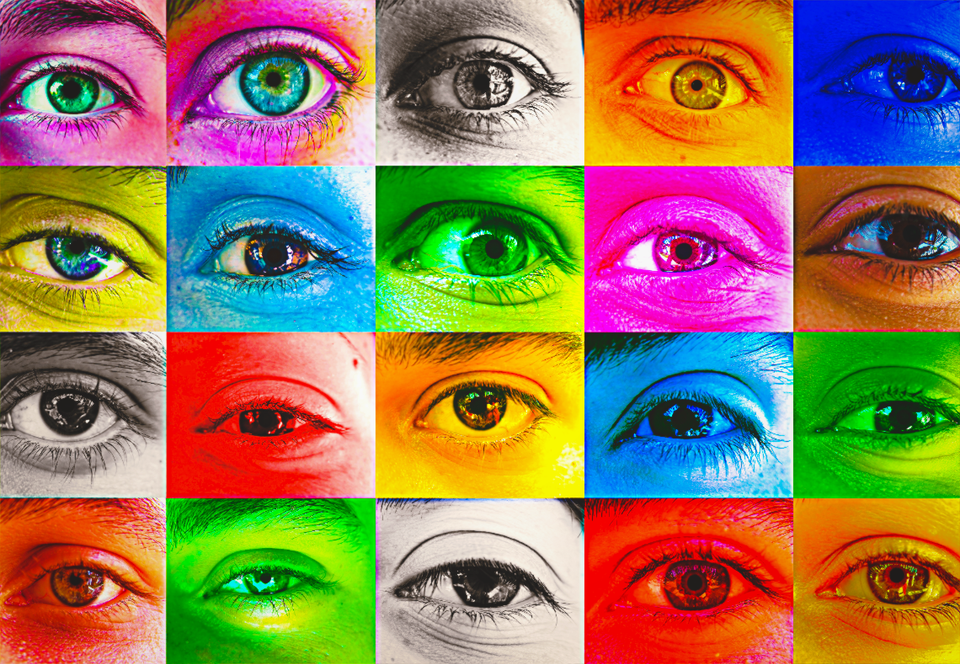
Each chapter of God Don't Make No Trash is built from small stories that are 300 words or less. See In My Eyes below as a complete chapter. Also check out GDMNT's introduction or visit the stories page.
Spy school 🔦
“Sometimes you gotta just chill. You gotta chill your thinking process.”
—Ghostface Killah
> in my eyes | a terrible mistake
I studied journalism and media in graduate school at the University of Texas at Austin. We were required to attend courses in other disciplines.
During my second year, I crossed campus for a class taught by a retired CIA operative at the LBJ School of Public Affairs.
Led by our Hollywood professor, we discussed the unforeseen consequences of cognitive biases and thinking lapses and fallacies on intelligence analysts operating in the classified world.
The nation’s sprawling intelligence agencies are responsible for reporting to Congress and the president about potential threats to U.S. national security.
One such threat is our own intelligence analysts and operatives.
Our course textbook goes on at length about the dangers of misperception and need for objectivity:
>> "Analysts need training to learn how to recognize when they have strong biases on issues they are writing about and to filter out their views, especially when they run counter to the intelligence at hand or the policies being considered."
Beware the mind’s natural, blundering, subjective tendencies. It's easy to casually dismiss America's foes as monolithic, unintelligent, and unsophisticated.
To "put yourself in their shoes" is to risk "a terrible mistake," our course textbook said.
You’d just be yourself in a different pair of shoes that happens to belong to Vladimir Putin.
Now you’re at risk of overlooking important differences between the United States and Russia in national identity, rationale, perception, and culture:
>> "Analysts are listened to because of their accumulated expertise, not the forcefulness of their views. … The need for objectivity is so great and so pervasive that it should be taken as a given. If the intelligence is not objective, then none of the other attributes – timeliness, digestibility, clarity – matter."
- next time "Feelings aren’t facts."
- listening Geto Boys "Mind Playing Tricks on Me"
Feelings aren't facts 🌎
" ... to live in society but not of it."
—Obituary for my brother
> in my eyes | misfire
But my experiences feel like the truth, you say.
Feelings are valid. But feelings aren't facts.
Our perception of the world leads us to believe that our feelings and emotions are objective truths.
But the truth as we know it is subjective and individually interpreted by each of the 8.3 billion people on earth.
Strides made by scientists have enabled us to more deeply investigate perception, thinking errors, fallacies, illusions, cognitive biases, and mental misfires in our interpretations of the world.
It begins with the inner workings of the human mind.
A falling tree can't make noise without us present. Color can't be seen without us present.
We might believe the naturally occurring voices in our heads are directing our behaviors. But an estimated one in ten Americans doesn't have an inner voice (a fact that continues to blow my mind).
The ancient philosopher Plato concluded that true, or objective, reality lived beyond our eyes, ears, nose, and perceptions. Professional thinkers have explored this conclusion ever since.
What's real? Can anything be called real if we can only individually experience it?
- next time "The stars are aligned just for you."
- listening Blonde Redhead "Misery is a Butterfly"
You're weird 🥴🙃
"It's fucked up when your mind's playin' tricks on ya."
—Geto Boys
> in my eyes | terrorist
::: It might feel like the stars are aligned just for you.
::: It might feel like crime is high.
::: It might feel like today's youth are lazy.
::: It might feel like the world is in moral decay.
::: It might feel like people named George are elderly.
::: It might feel like your neighbor is a terrorist.
::: It might feel like unfamiliar people are weird.
Feelings are valid.
But feelings aren’t facts.
- next time "We're not powerless."
- listening Mogwai "Hungry Face"
Seeing mortality 💀😵
> in my eyes | enlightened
There are countless ways in which our minds commit mental errors throughout the day. We often can't consciously know it’s happening or consciously control it, like blinking.
- Take a surgical procedure presented to you with a 10% mortality rate and a 90% survival rate. Now imagine the exact same procedure is reframed with the 90% survival rate presented first. Seemingly, the mortality rate of 10% now somehow feels lower and less dangerous. That’s even though it's the same surgical procedure.
As consumers, we reach similarly irrational conclusions with products that are labeled 90% fat-free instead of 10% fat. We don’t always "see" or grasp such subtleties.
We see what our minds allow us to see and what we want our minds to see.
We're not powerless to this, however. Writes scientist and author Leonard Mlodinow who's written extensively about perception and psychology:
>> "Evolution designed the human brain not to accurately understand itself but to help us survive. … [However], we can use our conscious minds to study, to identify, and to pierce our cognitive illusions. By broadening our perspective to take into account how our minds operate, we can achieve a more enlightened view of who we are."
Famed psychologist Daniel Kahneman agrees. Modern revelations about the human mind affect everyone, including powerful decisionmakers, Kahneman wrote in his own 2021 book, "Noise: A Flaw in Human Judgment."
He said our goal shouldn't be to outlaw intuition. But our System 1 intuitive minds, as he calls them, need discipline and enlightenment to operate more usefully and effectively.
It's not just people. Companies and public institutions can be blind to the effects of cognitive errors or thinking lapses or irrational misjudgments:
>> "Professionals seldom see a need to confront noise in their own judgments. … Only occasionally will they be faced with a surprising disagreement, and when that happens, they will generally find reasons to view it as an isolated case."
- next time Getting to know the Will Rogers Paradox.
- listening Rihanna "Needed Me"
Reality is a paradox 🍇
"My ancestors didn’t come over on the Mayflower. They met the boat."
—Will Rogers
> in my eyes | the grapes of wrath
Famous Oklahoma humorist Will Rogers once made an observation about the people from his home state who were fleeing to California during the 1930s.
They were desperately trying to escape a major economic depression and a suffocating ecological disaster known as the Dust Bowl. Declared Rogers:
>> "When the Okies left Oklahoma and moved to California, they raised the average intelligence level in both states."
The remark is just one sentence. It nonetheless became known as the Will Rogers Paradox.
At first glance, it seems to sneer at logic.
But upon closer inspection, the Will Rogers Paradox has layers.
Will Rogers meant that those who left Oklahoma for California were not as bright as those who stayed behind.
The Dust Bowl migrants who did leave for California, on the other hand, were smarter than the average Californian.
This would theoretically lead to a rise in the intelligence levels of both groups.
That's because moving a person of lower smarts out of a higher-smarts category and into a lower-smarts category increases the mean of both.
But you probably didn't initially "see" this. I didn’t either.
- next time "One paper challenges our understanding of dumb."
- listening Cream "SWLABR"
Pattern seekers 👀
"If you want real control, drop the illusion of control. Let life have you. It does anyway."
—Byron Katie
> in my eyes | calling a car jealous
For decades now, psychologists have published one illuminating study after another giving us greater clarity over our minds and how we see and perceive the world.
One paper stands as an extraordinary example:
Students during a 1975 study at Yale University failed to grasp the role that chance and randomness played in coin flips.
The students were asked to predict the outcomes of 30 random coin tosses. Then they were asked questions about the flips.
Theoretical physicist Leonard Mlodinow in a 2008 book on randomness and chance described the study's findings along with what the students said:
"One-quarter reported that their performance would be hampered by distraction. Forty percent felt that their performance would improve with practice."
It should have been painfully obvious to the students that the coin tosses were random. The outcomes couldn’t be altered by distraction or warm-up flips.
Human beings worldwide exhibit all sorts of similar cognitive errors every minute of every day like those made by the students.
We have little conscious control over them or awareness of them.
The students experienced what the researchers called an "illusion of control."
Physicist Mlodinow is perhaps best known for writing two books with the late celebrity genius Stephen Hawking. But Mlodinow has also written extensively about randomness and the intuitive, unconscious mind.
In addition to illusions, our minds see patterns, too, he says:
>> "Random patterns can be interpreted as compelling evidence. … When a teacher initially believes that one student is smarter than another, he selectively focuses on evidence that tends to confirm the hypothesis. … We are focused on finding and confirming patterns rather than minimizing our false conclusions."
- next time "What we see is what we believe is reality."
- listening Graveyard "Hisingen Blues"
The reality we know 🫣
"How could they see anything but the shadows if they were never allowed to move their heads?"
—Plato, "Allegory of the Cave"
> in my eyes | darkness and light
The ancient Greek philosopher Plato explored the boundaries of perception hundreds of years ago in his "Allegory of the Cave."
In it, he describes a true or objective reality beyond what we can naturally experience with our given senses.
As humans, what we see is what we believe is reality.
That's the only world and reality we know.
But it's not the objective world. It's not reality as we individually understand that word.
Plato believed that enlightenment and reason through education could enable us to “see” beyond what we could otherwise physically see in our immediate world.
- next time "Much of this spending was only negligibly tied to terrorism."
- listening Liars "Vox Tuned D.E.D."
Trillions $$$
"The likelihood that any individual American will be killed in a terrorist event is microscopic."
—Political scientist John Mueller
> in my eyes | not waving but drowning
Terror is an emotion made of air that’s individually experienced by each person worldwide and guided by our perceptions.
So how could the United States ever win a trillion-dollar war against terror? 💰
Meaningful threats to the United States from Islamist terrorists are rare.
The universe of people angry enough to want to carry out an attack is small. The universe of people who might actually do it is even smaller.
More people die in bathtub drownings than attacks by Islamist terrorists.
When they do happen, to be sure, terrorist attacks are highly effective at provoking overreactions and an atmosphere of sickening uncertainty.
We spent trillions of dollars after the Sept. 11, 2001, terrorism hijackings trying to prove we could obliterate any new threats worldwide no matter how shaky the intelligence.
For years as a journalist, I wrote news story after news story about bloated security initiatives that created the perception and appearance of safety and security.
We couldn't effectively measure how many would-be attacks were successfully unraveled by such measures.
We couldn't fully know what we were getting from billions of dollars being showered on state and local agencies for a bonanza of yet more security spending.
Typical state and local purchases included costly new tank-like trucks and chromed-out, blinking command vehicles. There were multimillion dollar so-called fusion centers in every state where people from multiple agencies ostensibly analyzed tips for terrorism leads.
Much of this spending was only negligibly tied to terrorism and security. Years later, no one in the mainstream talks about fusion centers.
How are they keeping us safe now?
America vowed to "never forget" the 9/11 hijackings and the Global War on Air.
We spent and spent and spent fighting ghostly illusions.
Then we forgot.
- next time "Christians claim control of 'faith.'"
- listening Busta Rhymes "Gimme Some More"
Universe 🪐⋆⭒
"I have no country to fight for. My country is the earth, and I am a citizen of the world."
—Eugene Debs
> in my eyes | the politics of air
Republicans unofficially claim control of "patriotism." Christians unofficially claim control of "faith." Democrats unofficially claim control of "diversity."
Our minds lead us to believe that our subjective, individual interpretations of the world and reality are somehow universally shared and understood by everyone else. ★⋆°✩🛸
- next time "The human mind is designed to be both a scientist and an attorney."
- listening Blossom "Warm Stay"
Death grips 🥀
"God only knows what it's doing to our children's brains."
—Facebook founding president Sean Parker
> in my eyes | fetish
The human mind's natural operations endlessly blind us to important truths about ourselves.
We "see" ourselves as action heroes in an epic, blockbuster film.
In our imaginations, we have far more control over the events around us than we ever possibly could.
We struggle to "see" beyond our individually experienced realities.
We're naturally talented at deflecting messages and signals that threaten how we perceive ourselves and the world.
"The human mind is designed to be both a scientist and an attorney," writes physicist Leonard Mlodinow in a book on perception and psychology. "[It's] both a conscious seeker of objective truth and an unconscious, impassioned advocate for what we want to believe."
I often wonder about my own fallacies and illusions and cognitive biases and errors that smolder and crackle beyond my conscious awareness.
I'm suspicious for no reason of people who drive Nissans.
I won’t use Grubhub because it sounds vaguely like a fetish site.
We're not just talking about race, gender, and orientation biases. We're talking about biases and errors that continuously threaten to undermine our own stated wishes.
And they can't just be turned off.
An important moment in one's quest through Alcoholics Anonymous is internalizing – not merely hearing – that our control over the world can't possibly be what we imagine it to be.
Our minds also fool us into believing there's far more certainty in the world than could ever be the case.
To get my first 30 days without a drink, I had to loosen my death grip on the universe.
- next time Who's right about me? Who's wrong?
- listening The Knife "Heartbeats"
Sassy 💋
"I don't feel ashamed to be loud, which is an argument I’ve had with lots of men who thought I was too sassy and unladylike."
—SZA
> in my eyes | the confidence machine
Just because I'm sober now doesn't mean the rules of perception no longer apply to me.
For example, I have more confidence in sobriety.
But anyone around me at any time could say I'm actually just an arrogant asshole disguised as a charming sober person.
Anyone at any time could interpret me as deliciously obstinate or irresponsibly sassy or ruthlessly sentimental.
They could say I'm a worse person in sobriety, not a better one. I can't control another person's interpretation of reality.
I know intellectually that these are all just words made of air. But they're words dense with meaning and power. My inner war over words and their power never ends.
What's "right" with me?
What's "wrong" with me?
Why do I have to care so much?
Wait, do I care too little?
Do I care about the wrong things?

- next time Chapter end
- listening Dio "Rainbow in the Dark"
>> full series | alerts | playlist / social | tip jar
– 30 –